
My mother was smart and one of the wisest people I’ve known. She had a PhD in psychology and also very high EQ (emotional intelligence or emotional quotient). I was a fragile child and rebellious teen but found my footing by the time I turned 20. Yet, until my mother could no longer communicate, almost whenever I visited her, she’d ask me, “How’s your psyche?”
Regrettably, I never asked my mother about her psyche and she did not have a good ending. Despite her high IQ and EQ, my mother didn’t take an active role in her care through the end of life, nor did she express how she wanted to die. She spent years in and out of the hospital, as well as rehab and skilled nursing facilities, for her cancer and complications. And, she kept bouncing back until she didn’t, spending her last couple of months largely comatose.
Shortly before my mother died in 2010, my sister read Atul Gawande’s New Yorker article, “What Should Medicine Do When It Can’t Save You?” It motivated us to switch our mother to hospice care for comfort and support. She passed away less than 48 hours later.
Afterwards I asked my father why mother hadn’t been moved to hospice earlier. He responded what I’ve heard all too often: “She had great medical care and we simply did what the doctors recommended.” Two great ironies are that my father helped found the first hospice in Massachusetts in 1978, and my parents used to live next door to Atul Gawande.
To honor my mother, in 2015 I founded GoodEnding, Inc., a nonprofit focused on improving the end of life. As part of my GoodEnding work, co-author Sonya Dolan and I created the workbook, “Writing Your Own Ending: End-of-life planning to help you and your loved ones put things to rest.” I think the most important recommendation is to choose a health care agent who can make decisions on your behalf if necessary and thoroughly discuss your well-considered and documented end-of-life preferences with that person. I wish my mother had done this. Having conversations early can help your wishes be honored
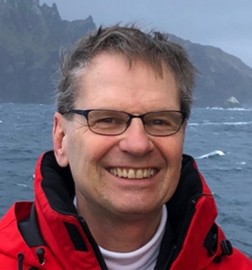
Following a successful career in international finance, Doug spent 2015 as a Fellow with Harvard’s Advanced Leadership Initiative, a program designed to leverage the talents of experienced leaders for social good. While at Harvard, Doug founded the nonprofit, GoodEnding, Inc. which seeks to improve aging and end-of-life for individuals and their loved ones. GoodEnding was inspired by Doug’s mother’s not so good ending.
In addition to his work with GoodEnding, Doug is a Patient and Family Support Volunteer and serves on the board of Regional Hospice in Danbury, CT. He previously served on the board of the Green Burial Council, as Board Chair of School Year Abroad, and is a Trustee Emeritus of Connecticut College.
When not engaged in volunteering, Doug enjoys sailing and has logged more than 13,000 miles offshore, most as skipper of his own vessel.