
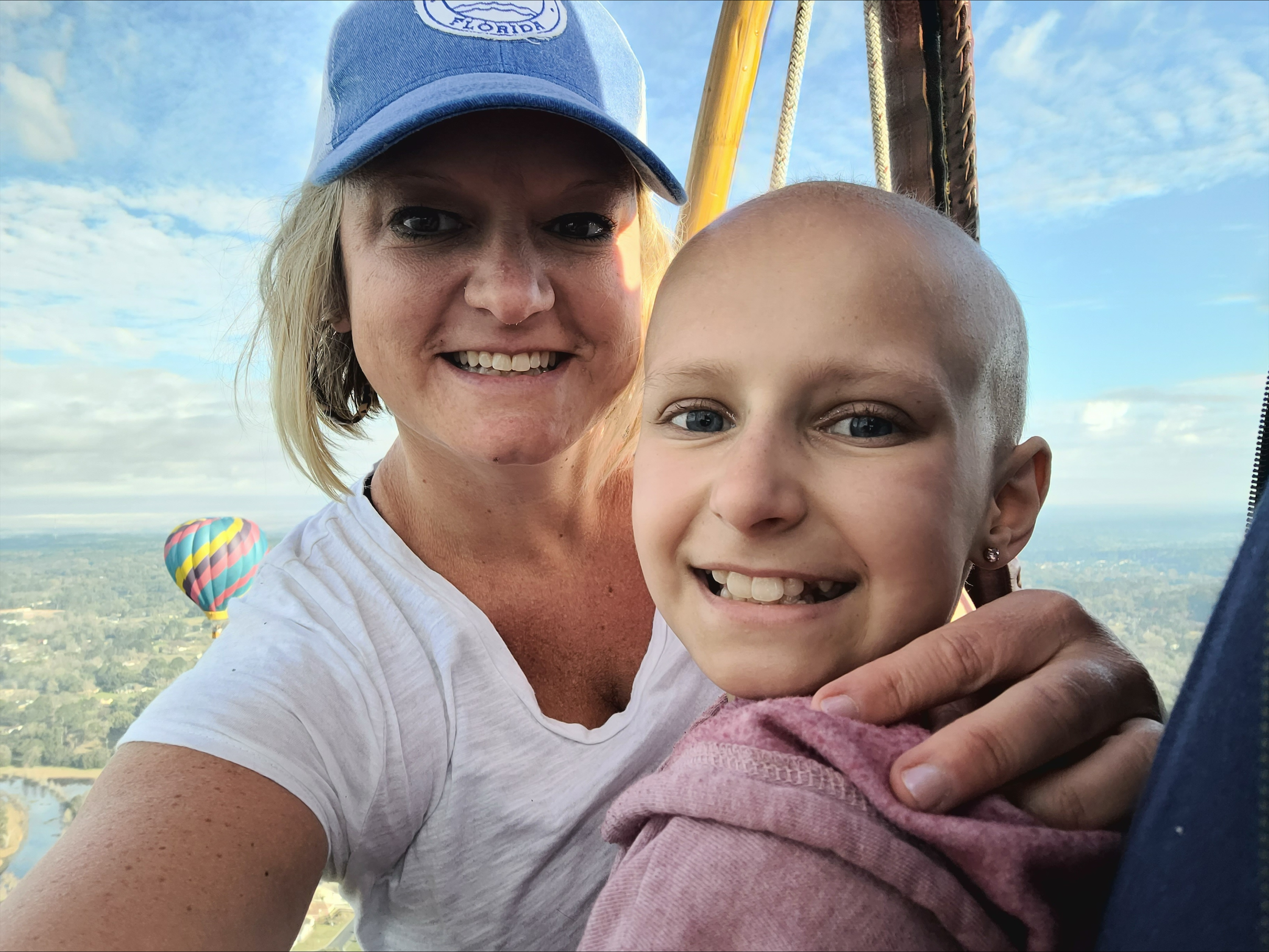
My daughter, Izzy, was diagnosed with cancer in 2011 at the age of three. In the beginning, what we were doing seemed so clear. It meant sacrificing quality of life for a bit, all for what was waiting on the other side of the sacrifice.
Over the next decade, Izzy went on to relapse five times. With each relapse, what we asked her to sacrifice became more, and what was waiting on the other side of the sacrifice became less. Until finally there was nothing left on the other side of the sacrifice. Because the only way she could stay alive was to sacrifice. Izzy recognized this and began articulating it in her own way.
At the age of ten she asked to be involved in her treatment decisions. There were some treatments she was willing to continue but some she refused. But more than anything else, she simply wanted to have a voice in the conversation. She began telling me: “Being alive is not the same as living.” And while I knew what she was hinting at, I didn’t know how to affirm it. Because, if I’m honest, I didn’t know if a mother was allowed to affirm it. Not until someone gave me permission.
One evening in January 2021, Izzy’s doctor popped his head in our hospital room and asked to talk with me. I left Izzy with her iPad and followed him and the nurse practitioner down the hall to the parents’ lounge. There we sat on vinyl couches as he boldly spoke to me in a way that doctors seldom do. Trained to preserve life, they hardly ever guide us another way.
“These past few years, you have always said your goal was quality of life. But I wonder if it’s time for a new goal,” he said gracefully. “At this point you can still have some say in how she dies, if you want that. But if you don’t make a decision about what the end looks like, you won’t have any say in it.” We went on to talk for over an hour.
I asked detailed questions about organ failure and infection. About her level of pain and her level of consciousness. Ultimately it really came down to where she wanted to die. Home or in the hospital? Because if she wanted to die in the comfort of her own home — which I knew she did — we needed to get her healthy enough to make that happen. And that meant stopping treatment.
I’m not quite sure how you thank someone for a conversation like that. For meeting you in the darkness, not with fragments of false hope but with seeds of honesty instead. Everyone always tells us not to think about the end. But when we think about it, about what we want most for those final moments, what we gain is a sense of control. I always thought talking about death was negative, but on that day, I realized it’s just not that black and white. Not when you’re living with a terminal illness. When we know the body cannot be sustained, and we acknowledge it, that’s something entirely different. That’s grace.
After that I went back to Izzy’s room to recap our conversation. And to ask my twelve-year-old daughter where she wanted to die. I knew, but I needed to be sure. More sure of a thing than I had ever been.
I put down the rail of the hospital bed and climbed in bed with her.
“So, I need to ask you a question. You’ve told me before, but I want to ask again. When you die — which, we’re all going to — do you want to die here, or…”
She interrupted me before I could finish. “No, I do not want to die in the hospital. I told you, I want to be at home.”
“Then we might want to try doing what we can to make sure you get that?” She nodded, still not sure where this was going.
“We can do one of two things. We can keep doing treatment. Keep coming to the hospital and fighting cancer and you can maybe live another year if we’re lucky, I don’t know. Or we can get up tomorrow and we can go home. And we never have to come back. We can do whatever you feel like. I was thinking we could maybe go to the beach for a month.” She started to smile. “But if we do that, I need to know you understand what that means.” I waited, watching her face for any signs of fear or heartache, but I saw none. Instead, she perked up in her bed and smiled even bigger, her eyes glassy with tears of joy.
“Can we really leave and never come back? Please?”
“Yes,” I told her. “But I want to be sure you understand that means you’ll only live a few…”
She grabbed my arm, interrupting me once again, “Mom. We both know this isn’t living.” I smiled gently, tears filling my own eyes.
“Can we please leave?” she asked me one final time.
And the next morning we did.
Izzy died three months later after a month at the beach and an epic thirteenth birthday party. She died in our living room surrounded by family and her favorite cat, Elsa. And in those final months she planned out everything she wanted for her end. From what she wanted me to do with her ashes to what clothes she wanted her friends to wear at her celebration of life.
Izzy died with courage and grace because she felt more in control of her life than she ever had been. And all of that happened because of one doctor. One human being who was willing to bravely sit me down on a vinyl couch and tell me the whole truth. It will never be the truth I wanted but it will always be the truth I am grateful for.
Molly Mattocks is a mother, writer, and end-of-life advocate. She works full time in hospice administration and shares pieces of her journey with loss on her Instagram page. This excerpt is adapted from a chapter in her forthcoming memoir, When Death Is Grace.