
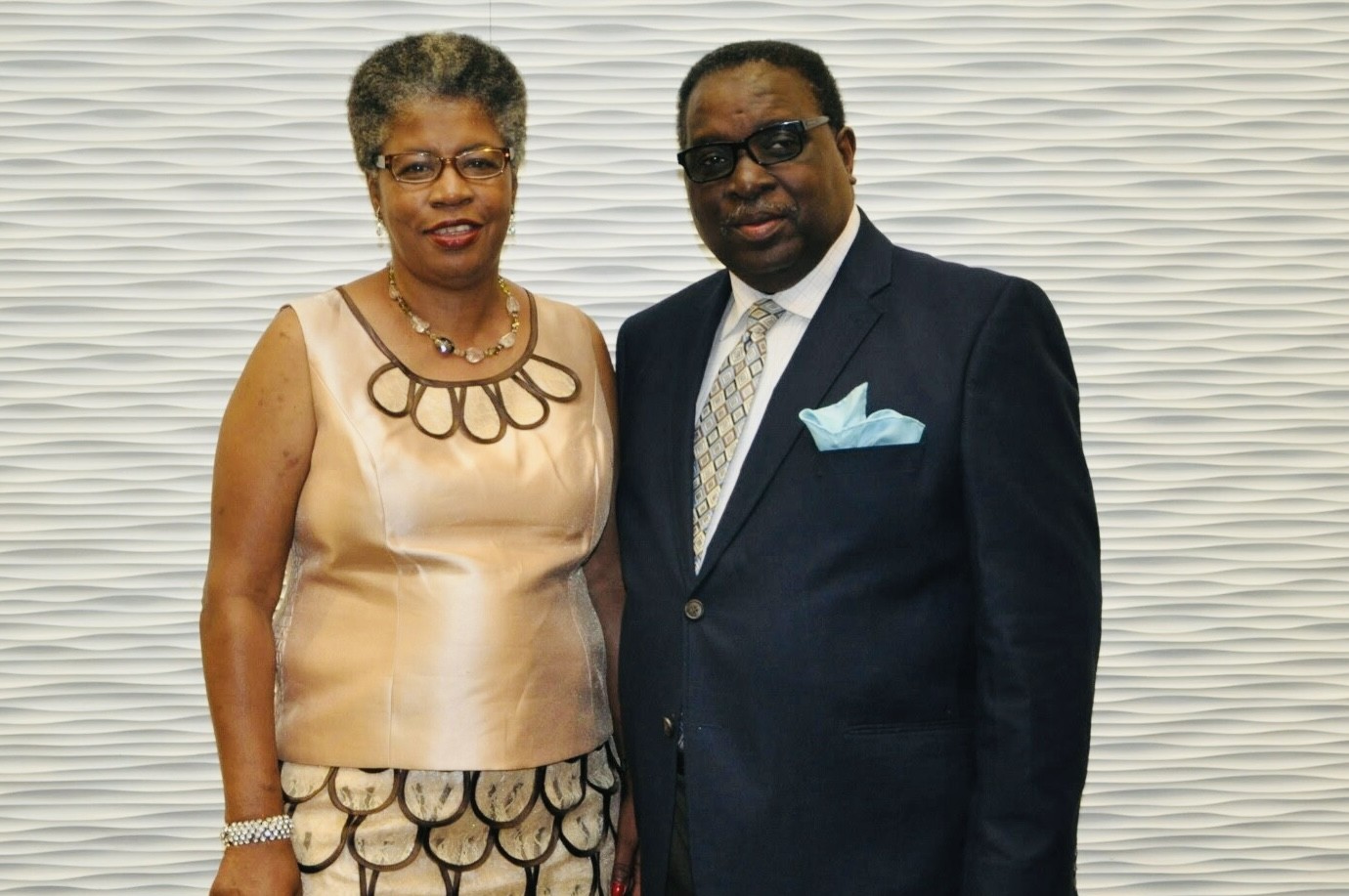
Over the last year, I have come to understand caregiving differently.
Not as an abstract concept. Not as a framework on a page. Not even only as a professional conversation, though I work at the Institute for Healthcare Improvement (IHI) and spend a good deal of my time thinking about care, well-being, and what it means to build systems that honor people. I have come to understand caregiving as something much more intimate, much more ordinary, and much more sacred. It has become the shape of my life.
Last year, around Mother’s Day, my father went into the hospital. What followed was a season of travel, worry, hope, exhaustion, and love. I found myself going back and forth every other week to be with him, to be with my mother, to be with my family, and to help hold together what illness always disrupts. There is a particular kind of ache that comes when you realize a parent is no longer simply “sick,” but fragile in a way that changes the emotional architecture of a family.
The last time I saw my father in person, I kissed him and told him I would be back. I told him we would finish the will and that I would honor his wish to “take care of your mama.” As I drove away, I had the quiet sense that he knew things would be different.
The next time I saw him was on FaceTime, through my sister’s tears, with my family gathered in the room and my mother offering the words none of us were ready to hear: “It is time to let him go.”
My father died, and with his death something else changed too.
I became more fully aware that grief does not arrive alone. It brings responsibility with it. It brings paperwork and phone calls. It brings unfinished conversations and practical decisions. It brings the quiet realization that someone else now needs you in a new way. In my case, it meant turning toward my mother with fresh tenderness and fresh concern, even as I was still trying to make sense of my own loss.
These days, I find myself helping my mother process her grief while also living inside my own. I am watching her become more frail and, if I am honest, more stubborn too. Some days that makes me smile. Some days it breaks my heart.
There is humor in this season, even now. Like trying to get all of her bills paid online and hearing her ask, with complete sincerity, “But what if the internet breaks?” Or watching her insist on going to the bank to get money orders because it gives her a sense of independence, a rhythm she recognizes, a way of doing things that still feels connected to my father and to the life they built together. It would be easy to dismiss those habits as outdated. But that would miss the deeper truth. Sometimes what looks impractical on the surface is really about dignity, memory, and control. Sometimes it is about trying to keep one small part of life familiar when everything else has changed.
That is one of the things caregiving is teaching me: not every question is really about the question being asked.
Sometimes “What if the internet breaks?” is really a question about safety. Sometimes resistance to change is really grief. Sometimes stubbornness is really fear. Sometimes the need to do it “the old way” is about preserving a sense of self. Caregiving asks us to slow down enough to notice that.
At IHI, we often talk about “what matters.” In the Age-Friendly Health Systems movement, that question is foundational. What matters to a person should guide care, not get crowded out by routines, assumptions, or clinical efficiency. The 4Ms Framework of Age-Friendly Care begins there: with What Matters, as well as Medication, Mentation (or Mind), and Mobility. IHI’s My Health Checklist is built to help older adults prepare for medical visits by focusing attention on what is going well, what could be better, and the questions or concerns that matter most to them.
I have come to believe that “What matters to you?” is not only a clinical question. It is also a family question. A caregiver question. A grief question.
What matters to my mother now? What helps her feel like herself? What choices is she still able to make? What support does she need from me? What conversations are we avoiding because they are hard? What do I need to be prepared to answer, even when I do not feel ready?
These are not theoretical questions in my life anymore.
Even with a husband who is a doctor, even with access to resources, language, and support, there is still resistance to support and advice. There are still hard conversations about health choices. There are still moments when trying to talk about future care feels like asking someone to surrender more than they are ready to surrender. There are still days when even getting to a clear statement of what matters feels emotionally loaded.
That, too, has taught me something important: knowledge does not erase vulnerability.
Families can be deeply loving and still struggle to talk plainly. People can know what is wise and still resist it. Aging can require support and still make independence feel precious. Grief can soften us and harden us at the same time.
And many of us are living this while also holding work, children, partners, finances, and our own health. The term sandwich generation is useful, but it can also feel too tidy for what this actually is. Because for many of us, this is not just a demographic category. It is emotional multitasking. It is logistical complexity. It is carrying love, worry, memory, obligation, and fatigue all at once. It is being someone’s child and someone’s caregiver at the same time. It is learning how to grieve one parent while becoming newly responsible for another.
I know I am not alone in that.
So many of my friends are in this season too. We are having conversations about parents, appointments, medication lists, online passwords, wills, hospital stays, food choices, mobility, loneliness, denial, and the quiet dread of what may come next. We are figuring out how to honor our elders without infantilizing them. We are trying to respect independence while also recognizing risk. We are learning, often imperfectly, how to ask hard questions before a crisis forces them on us.
That is why I am so grateful for the invitation from peers at TCP into this conversation.
I am grateful because the work is real. The resources are real. The friendly voices that helped guide my family through this process were real. In the midst of my father’s illness and death, and now in this ongoing chapter of caring for my mother, I have felt supported not only as an employee, but as a human being. I do not take that lightly.
I am also grateful because this is the kind of work IHI is uniquely positioned to help advance: work that recognizes that health care is never only about treatment. It is about relationships. It is about preparation. It is about dignity. It is about helping people and families name what matters before decisions have to be made under pressure.
One of the most moving things I have read recently in our professional orbit came through Darnell Lamont Walker reflection on choosing the right health care proxy. The piece reminds us that the right proxy is not simply the closest relative, but the person who can carry your truth, stay rooted under pressure, and speak your wishes clearly when you no longer can. That insight landed deeply for me. Because in families, we often assume love automatically prepares us for these moments. But love also needs language. Love needs conversation. Love needs support.
That may be the invitation underneath all of this: to talk sooner, to listen more carefully, to ask better questions, to recognize that behind every practical task is often a deeper human need, and to make room for grief, humor, frustration, tenderness, and truth to sit in the same room together.
For me, this season has made what matters feel less like part of a framework and more like a way of being with the people I love.
It means listening when my mother tells a story for the fourth time, because maybe what she needs is not correction but company. It means understanding that a trip to the bank may not only be about paying a bill, but about preserving agency. It means trying, again and again, to have conversations about health, future planning, and care in ways that honor her voice. It means recognizing that I am now, in some ways, the man of the family, even as I smile at that phrase and all the weight it carries. Not because I have all the answers, but because love is now asking more of me.
And it means admitting that I am still grieving too.
Still missing my father. Still replaying the drives, the flights, the hospital visits, the hope, the fear. Still grateful that I got to show up. Still grateful that my workplace understood enough of my humanity to help carry me through it. Still learning that caregiving is not only about being strong for someone else, but about allowing yourself to be changed by what love requires.
Maybe that is why this conversation matters so much.
Because our stories can become resources for one another. Because so many of us are navigating some version of these questions. Because asking “What matters to you?” can open a different kind of care. And because sometimes the most powerful thing we can offer each other is not a perfect answer, but an honest story that says: you are not the only one carrying this.
These days, I hear that truth in the smallest moments: in my mother’s questions, in the memories of my father, in the choices we are still trying to make with love and dignity. That is what this season is teaching me. What matters is not only what we decide, but how we accompany one another through what is hard.
That is my hope in sharing our story: that it might help someone begin the conversation, ask the next question, or sit with a loved one a little longer, and a little more gently. In a season of grief and caregiving, that has come to feel like its own kind of care.
Dr. Philip McAdoo, IHI Director of Internal Equity and Workplace Well-Being
Dr.McAdoo boasts a degree in communications studies from the University of North Carolina at Chapel Hill, an MA in transformative leadership from The California Institute of Integral Studies, and a Doctor of Education from The University of Pennsylvania in the Graduate School of Education.
Dr. McAdoo is a staunch LGBTQ activist who fearlessly fights homophobia. In collaboration with Rep. John Lewis, he has introduced legislation to Congress that streamlines the process for same-sex couples to adopt children from foster care. As an openly gay educator, Dr. McAdoo specializes in character development and diversity and inclusion. He has authored articles on these topics and has led numerous workshops and professional development sessions on LGBTQ advocacy.